

Blog
Case studies, strategies, and ideas shaping modern technology.
No VPNs, No Bastions: Zero Trust Kubernetes

Introduction
As Kubernetes platforms evolve, many organisations reach a point where their original architecture, optimised for speed and accessibility, no longer meets modern security expectations.
A common pattern in earlier-stage environments is to rely on:
- Public Kubernetes API endpoints
- Broad network access controls
- VPNs or bastion hosts to secure internal systems
While these approaches are widely used, they introduce long-term challenges. VPNs extend the network perimeter and add operational overhead. Bastion hosts centralised access but still exposes public IP addresses and requires ongoing maintenance. In both cases, access is still fundamentally based on network location rather than identity.
This case study explores how we designed and implemented a fully private, zero-trust Kubernetes access model that eliminates the need for public endpoints, VPNs, and bastion hosts.
Challenge
At first glance, the platform appeared to follow good practices.
Clusters were provisioned using infrastructure-as-code, worker nodes were private, and deployments were handled through automated pipelines. From an operational standpoint, everything worked as expected.
However, a deeper review revealed a fundamental issue.
The Gap Between Perception and Reality
Although the worker nodes were private, the Kubernetes control plane remained publicly accessible. This meant:
- The Kubernetes API could still be reached from outside the environment
- Access controls relied on network restrictions rather than true isolation
- In some cases, authorised networks were overly permissive
This created a misleading situation where the clusters appeared secure, but the primary entry point remained exposed.
Why This Became Critical
The Kubernetes API is the control surface for:
- Deploying workloads
- Modifying infrastructure
- Accessing cluster state
Even when protected by IAM and network rules, a public endpoint introduces unnecessary risk. The team needed to eliminate this exposure entirely by moving to private endpoint-only clusters.
Security Broke the Delivery Model
Enabling private endpoints immediately exposed a deeper dependency.
The existing deployment workflow relied on:
- External CI/CD pipelines
- Direct communication with the Kubernetes API
- Applying configuration (such as RootSync manifests) after cluster creation
Once the public endpoint was disabled:
- Standard access methods stopped working
- Pipelines could no longer complete deployments
- The system lost its ability to bootstrap and update clusters
This revealed a key architectural flaw:
The platform’s delivery model depended on the very exposure it now needed to remove.

The Constraint: No VPNs or Bastion Hosts
The team also made a deliberate decision to avoid traditional solutions:
- VPNs would introduce cost, complexity, and extend the network boundary
- Bastion hosts would still expose public endpoints and require ongoing management
Instead, the solution needed to:
- Keep clusters fully private
- Avoid expanding the network perimeter
- Provide secure, controlled access based on identity, not location
A Broader Pattern
A similar challenge had already been encountered in an AWS environment, where clusters were fully private, but our engineers still needed to:
- Debug services
- Access internal workloads
- Connect to databases inside the cluster
This reinforced a key insight:
Removing public access is only half the problem. The real challenge is enabling secure, controlled access back into private systems.
Solution
To address these challenges, the team implemented a multi-layered redesign, aligning the platform with zero-trust principles and removing reliance on network-based access.
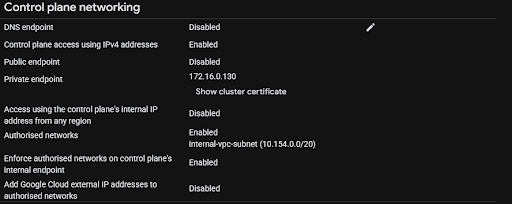
Step 1: Making Clusters Truly Private
The first step was to eliminate all public exposure.
Clusters were reconfigured to:
- Enable private nodes and private endpoints
- Disable public API access entirely
- Restrict access to internal network ranges only
This ensured that:
- The Kubernetes API could not be reached from the internet
- All communication with the cluster originated inside the trusted environment
Step 2: Moving Deployment Inside the Network
With external access removed, the deployment model had to change.
Traditionally, services such as GitHub Actions and Bitbucket Pipelines run on external infrastructure and connect into the target environment to perform deployments.
The team reversed this model.
The source code remained in GitHub and Bitbucket, but the execution environment was moved inside the private network. A self-hosted CI/CD runner securely pulls the pipeline jobs and source code, then performs all deployment steps from within the VPC.
This means code stays external, but execution happens internally.
As a result:
- No public Kubernetes API endpoint is required
- No inbound access to the cluster is needed
- Existing CI/CD workflows continue with minimal changes
Internal CI/CD Execution
A private CI/CD runner was deployed inside the same VPC as the cluster.
This runner:
- Executes pipeline jobs internally
- Has direct access to the private Kubernetes API
- Handles infrastructure provisioning and workload deployment
This allowed the team to:
- Maintain existing pipelines
- Avoid exposing the cluster
- Restore full deployment functionality
From a developer perspective, workflows remained largely unchanged, while security improved significantly behind the scenes.
Step 3: Reducing Dependency on Direct Access (GitOps)
To further strengthen the model, the team introduced GitOps principles.
Instead of relying on direct API calls:
- Desired state is defined in version-controlled manifests
- The cluster continuously synchronises itself with that state
Using Config Sync:
- Workloads are applied automatically inside the cluster
- The need for inbound connectivity is reduced
This creates a more resilient and secure deployment pattern.
Step 4: Replacing Network Access with Identity-Based Access
A key part of the solution was removing reliance on network-level trust.
Instead of VPNs or bastion hosts, the team adopted identity-driven access patterns.
GCP Approach: Connect Gateway
Access to clusters is handled through a managed API layer:
- Users authenticate via IAM
- Requests are routed through Google’s control plane
- Traffic is securely proxied to the private cluster
This means:
- No direct endpoint exposure
- No VPN required
- No bastion infrastructure
Access becomes:
- Centralised
- Auditable
- Based on identity-based controls
AWS Comparison: SSM Tunnel-Based Access
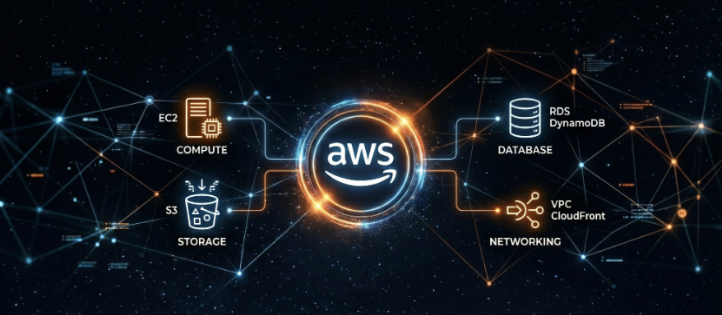
In AWS, the same zero-trust objectives are achieved using a different model.
Deployments via CI/CD
For automated deployments to private EKS clusters:
- A self-hosted Bitbucket runner operates inside the AWS environment
- The runner securely pulls pipeline jobs from Bitbucket
- Deployment traffic reaches the cluster over internal network paths only
- No public Kubernetes API endpoint is required
In this model, the pipeline execution environment runs inside the private network and initiates outbound connections to Bitbucket.
Human Access via SSM Tunnel
For engineers who need temporary access to services inside the cluster:
- A sidecar container runs an AWS Systems Manager (SSM) Agent alongside the application
- The agent registers with AWS Systems Manager
- Engineers create an authenticated, short-lived tunnel from their local machine
- Traffic is routed through AWS infrastructure directly to the target service
For example, a developer debugging a PostgreSQL instance can create a local tunnel that connects securely to the database inside the cluster without exposing it publicly.
Key Characteristics
This AWS model:
- Requires no inbound network access
- Uses short-lived, authenticated connections
- Separates CI/CD access from human access
- Supports tightly controlled debugging workflows
- Keeps all cluster endpoints private
Google Cloud Comparison
In Google Cloud, both CI/CD systems and human users access private Google Kubernetes Engine clusters through GKE Connect Gateway.
The execution environment remains external, but all access is brokered through Google's control plane and governed by Google Cloud IAM.
Shared Principle
Although implemented differently, both AWS and Google Cloud follow the same architectural principles:
- No public endpoints
- No persistent network access
- Identity-based authentication
- Controlled, temporary connectivity
This is the foundation of a zero-trust architecture.

In Google Cloud, the control plane acts as the secure intermediary.
In AWS, trusted components run inside the private environment and establish outbound connections to external systems.
Both approaches eliminate public exposure while maintaining secure, auditable access for automation and engineers alike.
Step 5: Locking Down Network Egress
To complete the security model, outbound traffic was restricted.
A deny-by-default approach was implemented:
- Only internal network ranges are allowed
- Required cloud service endpoints are permitted
- All other traffic is blocked
This ensures that workloads:
- Cannot freely access the internet
- Only communicate with approved services
Step 6: Enforcing Least Privilege IAM
IAM was restructured to align with the new model:
- CI/CD systems have narrowly scoped permissions
- Users require explicit access roles
- Responsibilities are clearly separated
This reduces risk and ensures access is granted only where necessary.
Results
The outcome was a secure, scalable platform that aligns with modern zero-trust principles.
The platform was transformed from a traditionally secured Kubernetes environment into a fully private, identity-driven architecture based on zero-trust principles.
What Changed
- All Kubernetes clusters now operate with private endpoints only
- The Kubernetes API is no longer accessible from the internet
- CI/CD pipelines continue to deploy without relying on public access
- Engineers can securely access and debug services when needed
- VPNs and bastion hosts have been completely eliminated
- Outbound traffic is tightly controlled through restricted egress rules
- IAM permissions follow least privilege principles
Security Improvements
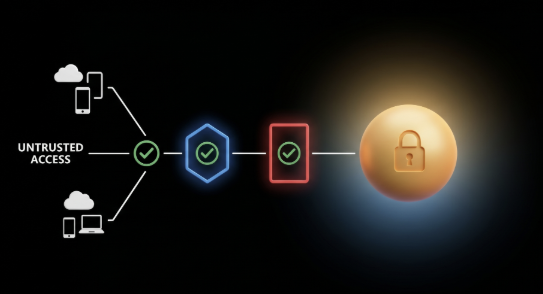
The new architecture significantly reduced the attack surface by removing public endpoints and replacing network-based trust with identity-based access controls.
All access is now:
- Authenticated and authorised
- Fully auditable
- Temporary where required
- Independent of network location
Operational Benefits
These security improvements were achieved without disrupting day-to-day development.
- Existing pipelines required minimal changes
- Developer workflows remained familiar
- Platform complexity is handled internally rather than by end users
- Secure access is available when needed for troubleshooting and support
Future Readiness
The platform is now positioned to support further enhancements, including:
- Full GitOps adoption
- Advanced controls such as VPC Service Controls
- Scalable multi-environment deployments
- Secure break-glass access patterns
Outcome
The organisation now has a secure and scalable Kubernetes platform that delivers:
- Fully private clusters
- Zero-trust access
- Seamless CI/CD
- Controlled operational access
- Reduced operational overhead
- Improved security posture
Key Takeaway
This case study highlights a fundamental shift in platform security:
Secure access is no longer about protecting a network perimeter; it is about removing it entirely.
By replacing VPNs and bastion hosts with:
- Private endpoints
- Internal execution
- Identity-based access
- Controlled connectivity patterns
The team achieved a secure, zero-trust Kubernetes architecture without sacrificing usability, performance, or developer productivity.
Ready to move to a fully private, identity-driven model?
We can help you redesign your platform around private endpoints, internal execution, and zero-trust access, without compromising operability.
